
Seattle office 206-682-5000
Menu
Seattle based, projects statewide and beyond
206-682-5000
Seattle office 206-682-5000
Menu
Seattle based, projects statewide and beyond
206-682-5000

Sustainability
Living roof systems that enhance performance, longevity, and sustainability.
Sustainable building practices are crucial for minimizing environmental impact, enhancing energy efficiency, and fostering healthier urban environments. Green roofing contributes by reducing the urban heat island effect, managing stormwater runoff, and supporting biodiversity.
In late 2023, we completed a building envelope roof upgrade at the World Trade Center West along Seattle’s waterfront. By converting a single-ply membrane roof into a fully integrated green roof system, we improved energy efficiency, reduced runoff into Elliott Bay, and contributed to carbon sequestration. Designed with pollinators in mind, this green space reinforces our commitment to sustainable building practices while enhancing the visual appeal for those in higher offices.
Drag it
Drag the handle, or click anywhere on the photograph.
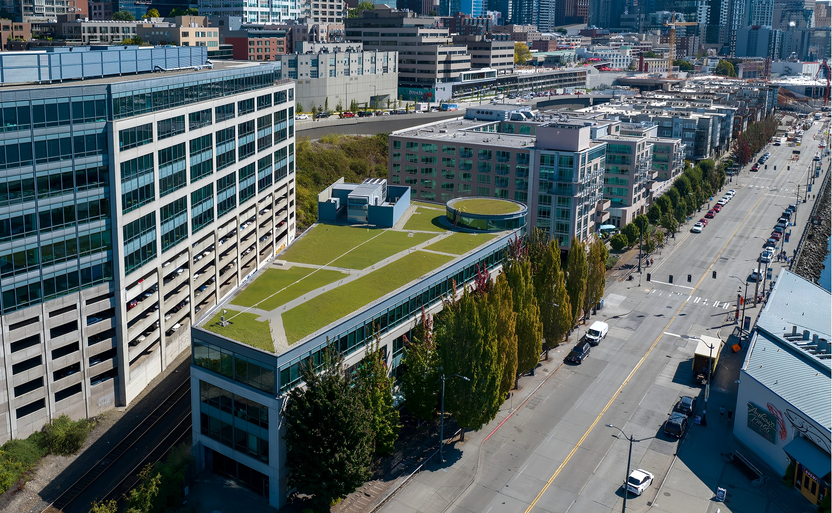
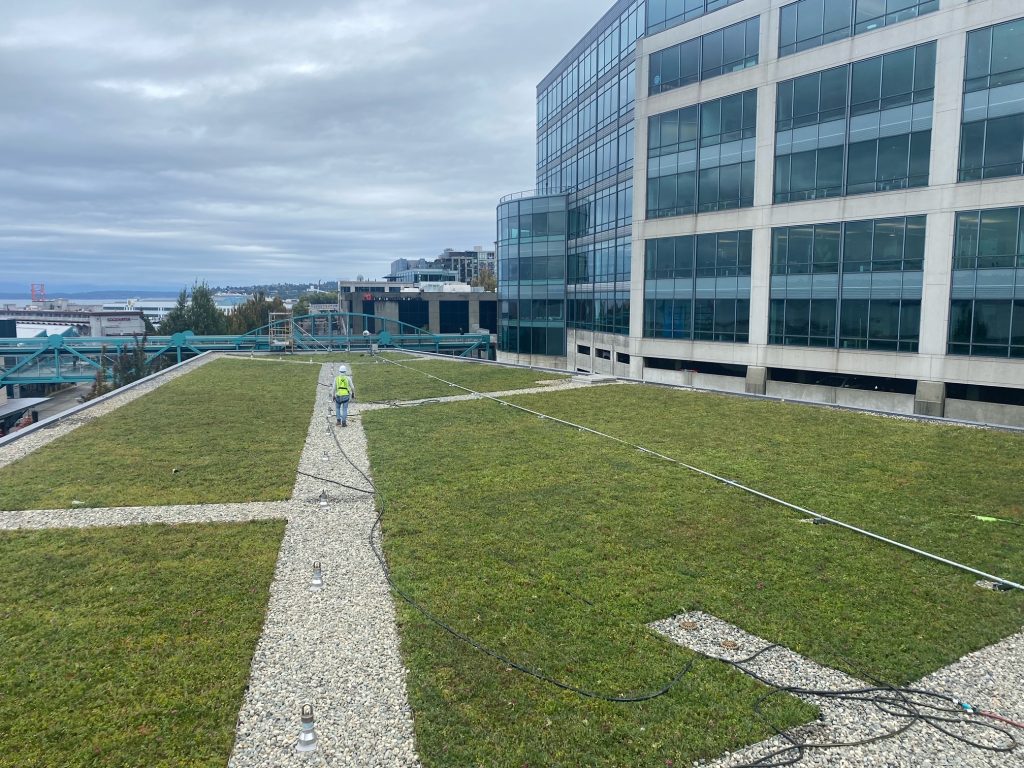 During installation
Completed
During installation
Completed
World Trade Center West, Seattle waterfront
Try it
Structural deck
Step 1 of 6 · membrane only
The roof as found: a single-ply membrane over the structural deck. It sheds every drop of rain straight into the city system, absorbs summer heat, and sits exposed to ultraviolet light for its whole life.
Hover a layer to name it. Heat and Water change what the overlay shows at this step.
Understanding how green roof systems function is essential to designing durable and high-performing buildings. We explain each component of the system, including the growing media, drainage layers, root barriers, structural considerations, and stormwater behavior. This clarity helps clients see how vegetated roofs support thermal performance, protect the building envelope, and advance long-term sustainability goals.
Applying green roof technology requires an integrated approach that considers structure, waterproofing, maintenance, and site-specific performance targets. We evaluate load capacity, membrane compatibility, stormwater requirements, and plant selection to ensure each system is seamlessly coordinated with the building’s envelope. The result is a resilient, low-impact roofscape that enhances both environmental performance and occupant experience.